

 |
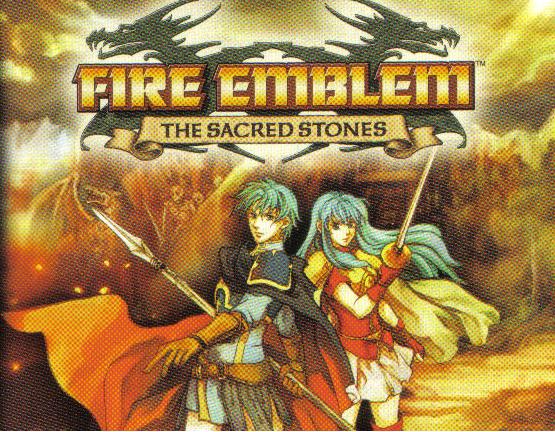
Double Trouble As a fan of strategy games, I jumped on the first GBA Fire Emblem game when it was released in the Summer of '04 and devoured it enthusiastically. When I found out that a new game in the series was coming for the summer of '05, I knew I would have to pick it up, too. That game, The Sacred Stones has proved to be a worth follow on to the first game. The Sacred Stones isn't really a true sequel to last year's game, since it takes place in a different game world with a different cast of characters. However, the core gameplay and unit set is the same, so those who are familiar with the first Fire Emblem GBA game will be able to jump into this game with no trouble. The story of this game revolves around the twin brother and sister, Ephraim and Erika. They are the prince and princess of a country named Renais who is suddenly attacked by its neighbor, Grado. Their quest to restore their country and get to the bottom of why Grado started such a vicious war will lead them to far off lands, introduce them to an eclectic group of comrades, and force them to confront one of their friends as an enemy. An interesting feature of this game is that the story branches after the first third of the missions are complete. The player can either choose to follow Erika or Ephraim through the middle third of the game, before the twins join forces again for the final act. In order to get the total story, the player has to go back and choose the opposite twin and play through the other missions. The basic gameplay of the Fire Emblem games will be familiar to anyone who has played games such as Advance Wars. Your characters are arrayed on a grid and each has certain movement and attach capabilities associated with it. Players move their characters into range of an enemy, and attack with either weapons or magic. The game has a "rock-paper-scissors" style balance going between its main weapons, swords, lances, and axes. Swords are strong against axes but weak against lances, for example. Unlike Advance Wars, each unit is a member of a separate basic class and has their own unique strengths and weaknesses. If a character is killed in a mission, they are gone for good. That fact, combined with a save system that prevents a player from going back and replaying a specific move or round without restarting the entire mission makes Fire Emblem games much more demanding and much less forgiving than many other turned based strategy games and caused me not a small amount of frustration. The improvements made to the gameplay of The Sacred Stones were mainly made to the game outside of battle. In the first GBA Fire Emblem, the player was locked into a linear progression through the missions. There was no way to purchase new weaponry or level characters outside of the main missions. As a result, if one was not careful the could wind up with a group of characters that were too poorly developed to succeed in the later stages of the game, with no recourse to level them up (as I discovered). The Sacred Stones eliminates this problem by allowing the player to navigate around the world map to visit armories and fight extra missions. Another difference between the two games is that the story in the first Fire Emblem was occasionally accentuated by a full screen illustration of events just described in the game's text. Unfortunately, this element has been dropped from the Sacred Stones and the story is wholly portrayed using the in-game engine. Other than this difference, the grapics of The Sacred Stones are the same. The beautiful battle animations for those classes that were present in the first game were re-used, and the animations for the new character classes are just as well done. The sound is top notch as well, although the first game featured a strong soundtrack in my opinion. In the end, I can't help but compare this game to the first GBA Fire Emblem. The Sacred Stones is not really a sequel; it is an excellent gaming experience in its own right. While I did get frustrated by some of the more difficult missions, I never the less found myself entertained for over 40 hours with it. So if, like me, you are a hopeless strategy junkie, you can't do much better on the GBA than Fire Emblem: The Sacred Stones. By Andy Rucker |
|||||||||||||||||