

 |
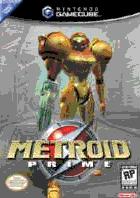
I Wish I had a Suit like That! Metroid Prime (MP) was a highly anticipated and very controversial game. First of all, the Metroid series, which centers on the adventures of female galactic bounty hunter Samus Aran, skipped the N64. On top of that, Nintendo handed off development of the GameCube game to an unknown and untested American developer. When word leaked out in 2001 that the game was going to be from a first-person perspective (many were hoping for either a side-scroller or at least a third person game), there was an outcry from many fans who worried that the perspective would spoil the adventure and exploration that are hallmarks of this series. However, Nintendo had faith in Retro, and slated MP to be its big holiday blockbuster for 2002. The resulting game justified that faith. Not only is MP a deep, engaging, and beautiful game, but it also captures the feel of previous Metroid games. The story of MP takes place between the original NES game and the first GameBoy game. Thus, MP is a prequel rather than a direct sequel to the SNES game. The plot revolves around Samus tracking down a rouge band of dastardly Space Pirates, who have been conducting biological experiments using a material known as Phazon that they collected from the planet Tallon IV. There, Samus must combat the results of these experiments in order to save the Chozo, a race of aliens that rescued her when a pirate attack killed her parents and raised her. The plotline does feature quite a few twists, and the use of the Scan Visor to reveal small tidbits of the story is an interesting dynamic. Since scanning the many computer screens and tablets scattered around Tallon IV isn't necessary, Retro leaves it up to the player to decide how deep into the story the would like to delve. Graphically, MP is very impressive. Environments are very large, there is very little slow-down, and the many creatures in the game that Samus faces are very well animated. The lighting, fog, and weather effects are also very well implemented, very convincingly transporting the player into a desolate and alien world. However, the most impressive aspect of MP's graphics are all the small touches and refinements added by Retro. For example, when there is a flash of bright light in front of Samus, the player can just catch a reflection of her face off the inside of her helmet visor (yeah, I know that every other game review in the world has mentioned that, but it is still a really neat effect!). Gameplay in MP retains many of the elements of the earlier Metroid games, but also introduces some new elements. Since the game is in a first-person view, Retro integrated a number of visors into Samus's equipment. Each one has different attributes that make them necessary or at least very helpful at certain points in the game. Player navigate MP using an excellent 3-D map system, acquiring a number of upgrades along the way. These upgrades then allow players to access previously unreachable areas of available levels, as well as reach whole new levels. Once in these newly accessed areas, there are yet more upgrades to find. Upgradeable items include Samus's suit, weapons, energy (her "life"), and maneuverability. MP is fairly non-linear, although there is a tip system in place to give players a general direction in which to proceed. Overall, MP plays very little like any FPS, a genre to which it is so often compared. Controlling this game takes a little getting used to. The common control set up for first-person games is to use one analog stick to move the character and the other analog stick to pan the camera, replicating the mouse/keyboard set up on PC's. However, in MP one stick is used to both turn left/right and move forwards and backwards. The only way to look up or down is to either lock on to an enemy or hold down the right trigger. Some people have a great difficulty accepting this scheme, but it really does work well in the game once you get used to it. The x and y buttons control jumping, previously the bane of all first person games. However, MP manages to make hopping from platform to platform a breeze in this game, thanks to tighter control and, later in the game, a double-jump. Rounding out the controls, the A button is the main fire weapon, the C stick switches the types of beam currently equipped in Samus's arm cannon, and the digital pad switches visor types. The sound and music of MP is not it's strongest suit, in my opinion. To be sure, all the tracks are of high quality and most fit the areas they are set to really well. Another interesting feature about the music is that it shifts into a battle theme in real-time when certain enemies attack, which really pumps up the excitement of the moment. However, I just didn't find any of the music tracks that catchy or enduring. The only one that comes to mind is the gritty theme that plays in the Tallon Overworld hub level. The sound effects were likewise middle of the road for me; they were competently made and matched the on-screen action well, but they just didn't jump out at me in any way. Connecting a GBA with a completed copy of Metroid Fusion allows several bonuses to be unlocked, including playing the original NES Metroid on your GBA and unlocking an additional suit for Samus to wear in MP. This is a reasonable bonus for playes that own both games, but I couldn't help feeling that some use of the GBA could have been made in-game. Overall, MP is a worthy addition to the Metroid series. The game actually benefits, rather than suffers from, the use of a first person perspective. This is by far one of the most absorbing games I have ever played. When you are playing MP, you ARE Samus. Retro deserves a lot of credit for creating a game that is not only engrossing, technically polished, and beautiful, but also very clearly feels like a Metroid game. Except for a small minority of individuals who may never be able to reconcile themselves to this game's control scheme, I have no problems recommending this title to anyone. By Andy Rucker |
|||||||||||||||||